Expertise
Our approachCasesCareersContactSEA
SEO
CRO
Social
Data
AI Marketing
WHAT WE SPECIALISE IN
SEO
Social

For years, Jasper stood in front of a class. After studying theoretical biology, he became a teacher, but he soon hit a wall every teacher knows: classes of thirty pupils, too little time and the constant feeling that a large part of the group is falling behind. Not because they couldn't do it, but because there simply wasn't enough attention to go round.
In 2017, that frustration became the basis for Brainboost: a tutoring institute with one core idea. Not learning more, but learning better. In small groups, with real attention, focused on teaching learning skills that last a lifetime.
What started as a personal mission grew into a serious business. And along the way, Jasper learnt a marketing lesson he has never forgotten.
In the early days, Brainboost wanted to build national awareness quickly. The strategy was ambitious: Tim Hofman as the face of the brand. The goal was clear. The dusty image of tutoring institutes, creaking chairs and dull classrooms, had to be completely turned around. The tone became hip, rebellious and fresh.
The result looked promising. Various media picked it up, website traffic shot up and the Brainboost name was suddenly recognised nationwide.
But the conversion? Practically zero.
The mistake wasn't in the execution, but in the assumption. The marketing targeted young people, because they thought Tim Hofman was great. But young people don't book tutoring. Their parents do. And parents are looking for something very different from a rebellious tone. They're looking for reliability, safety and expertise.
As soon as Jasper and his co-founder Eva became the face of Brainboost themselves, two former teachers with years of experience in education, everything changed. Their background turned out to be a much more powerful growth accelerator than the name of any influencer.
The lesson is simple but painful: know your real customer. Not the person who uses your product, but the person who makes the decision and pays the bill.
After the influencer lesson, Brainboost changed course. Social media delivered reach, but hardly any sign-ups. Google Ads turned out to be the real game-changer.
Search terms such as “bijles wiskunde Amsterdam” or “huiswerkbegeleiding Rotterdam” attract parents who are already actively looking for a solution. The intent is already there. You just have to convince them.
But reach is one thing, conversion is another. A parent who lands on a generic homepage via Google drops out. A parent who arrives on a specific landing page with clear information, a trial lesson offer and a short sign-up form converts.
Alongside Google Ads and optimised landing pages, Brainboost uses email marketing to build authority and keep the database warm. Three channels, each with a clear role, and together responsible for a steady stream of new sign-ups.
Despite all the digital efforts, Brainboost's biggest growth factor today is simply word of mouth. Happy parents talk. They refer friends, mention Brainboost in the school app and tip off other parents at the school gate.
That's no coincidence. It's a direct result of an approach that puts trust first. Brainboost works without stranglehold contracts. No annual subscriptions, no hidden clauses. Just a trial lesson, and then the freedom to stop whenever you want.
That honesty, combined with real results, creates the trust that's worth its weight in gold in the education sector.
Large tutoring institutes promise better grades. Two points higher for your final exam. Brainboost deliberately chooses a different story.
The slogan, “Beter leren is leuker leven” (better learning is a better life), says it all. It's not just about performance, but about the child's well-being, self-confidence and potential. A child who feels more relaxed in themselves and learns effectively will naturally achieve better results. The grades are a by-product, not the goal.
This distinction sounds philosophical, but it has very practical value. It appeals to parents who want more than a grade guarantee. Parents who want to see their child grow as a person.
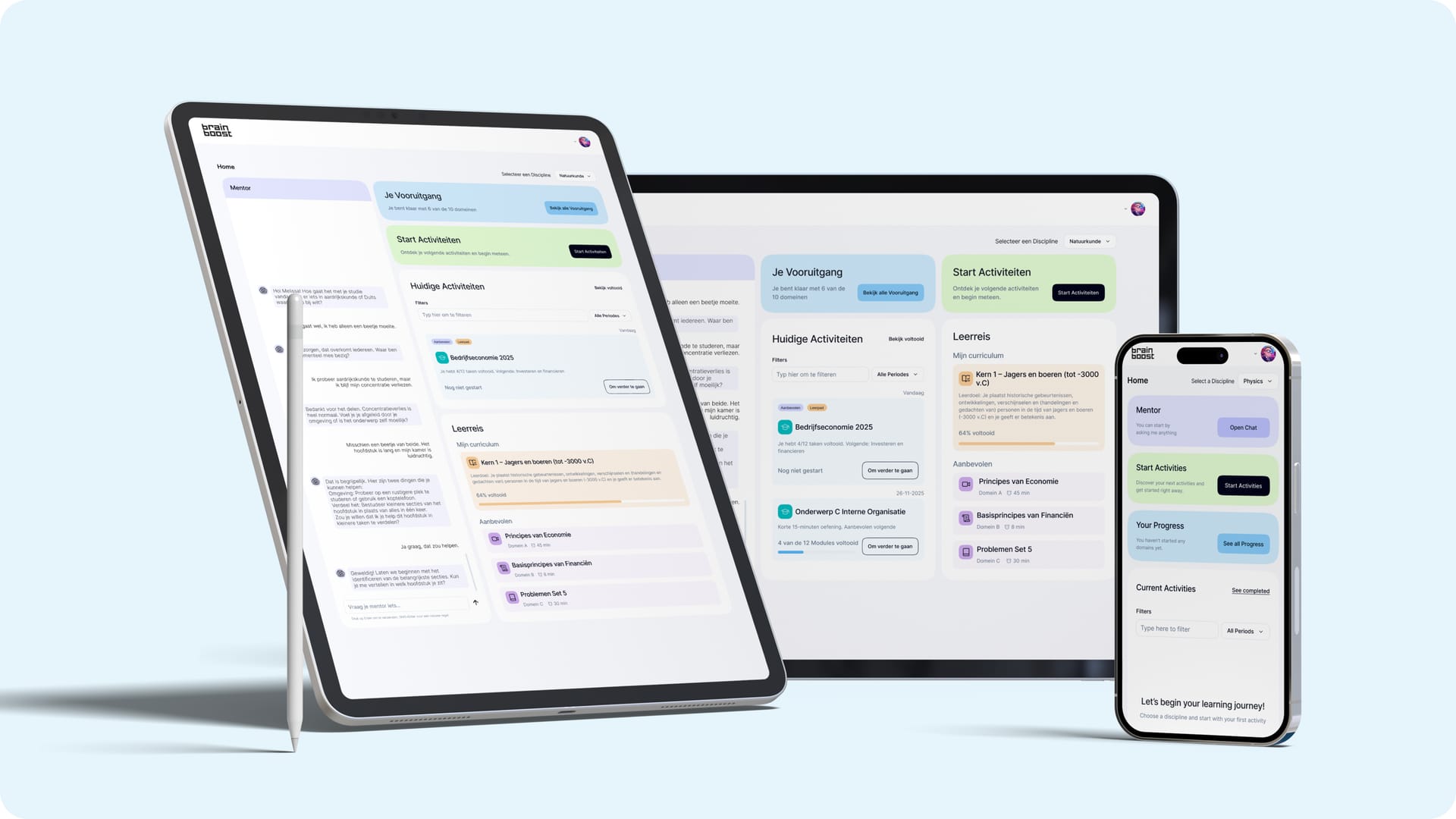
Jasper wants to go beyond tutoring alone. With Brainboost AI, he's working on a platform that fundamentally challenges the current education system. A system in which children are put into boxes such as VMBO or VWO, while reality is much more nuanced.
The idea is simple but powerful. A child can excel at biology but struggle with maths. Why would you impose the same level on that same child for both subjects? Brainboost AI looks at the pupil as an individual, adjusts the challenges per subject and per level, and can rephrase questions in several ways if a pupil doesn't understand something.
The vision reaches beyond the individual pupil. Jasper wants to help schools organise education more flexibly, so every child gets the chance to develop in their own way.
The Brainboost story is full of lessons that reach far beyond the education sector.
Influencer reach isn't the same as conversion. A big name gets attention, but if the message doesn't match the actual decision-maker, it's money thrown away. Search intent beats visibility: be present at the moment someone is really searching. Authenticity sells: Jasper and Eva as teachers turned out to be more credible than a Dutch celebrity. Your own expertise is often your strongest marketing tool. And customer satisfaction is your best campaign. Word of mouth isn't something you buy, it's something you earn.
Want more insights from the practice of education marketing?
Then listen to DGTLinsights and discover how professionals at international brands have found their way in this industry. Also take a look at our page on education marketing.
So does influencer marketing never work for an education business?
Not necessarily, but it depends entirely on who the decision-maker is. At Brainboost, that was parents, not the young people who followed Tim Hofman. If you use an influencer, they must have influence on the person who pays, not on the end user.
How do I know which keywords to use in Google Ads for my sector?
Start with the search terms your customer uses at the moment they have a problem. “Bijles wiskunde Amsterdam” isn't a brand search term, it's a problem search term. That's what you want to be found for.
What's the difference between reach and conversion, and why does it so often go wrong?
Reach means people see you. Conversion means they do something. The Tim Hofman campaign had enormous reach, but spoke to the wrong person. High reach with the wrong audience always delivers low conversion.
As a tutoring institute or education provider, should I invest in social media or Google Ads?
Google Ads almost always wins in education. Parents actively search for terms such as “bijles wiskunde Utrecht” at the moment they experience a problem. On social media, they scroll passively, without direct purchase intent. You get far more return on your budget from search intent than from visibility.
As an education provider, how do I reach the parent instead of the child?
By tailoring tone, channel and message to the decision-maker. Parents search on Google, read emails and want to see reliability, not hip campaigns. Put your own expertise as a teacher or founder front and centre; that appeals to parents much more than an influencer. If they trust your approach, they'll do your marketing for free.