Expertise
Our approachCasesCareersContactSEA
SEO
CRO
Social
Data
AI Marketing
WHAT WE SPECIALISE IN
SEO
Social
An SEO migration is often needed when a website moves from one environment to another, or when the site's domain name changes. It is essential that this process has as few negative effects as possible for search engines and users. That is why it helps to have an online marketing agency that can help you plan and organise the migration process – so everything runs as smoothly as possible.





Everything we do is based on data. From the strategy & execution of your marketing plan to a personal, in-depth analysis of your website.

We focus with skill and passion on our specialisms: SEO, online advertising & data.

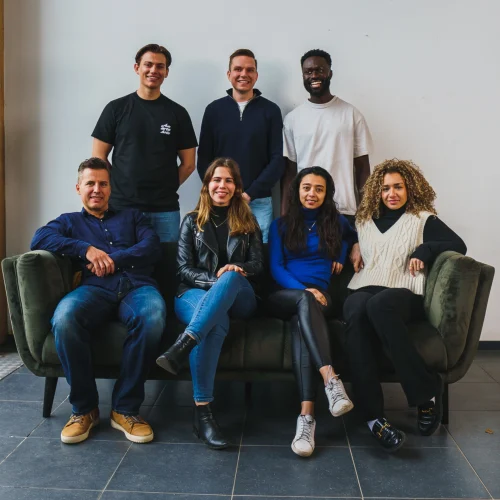
Cognitive diversity is close to our hearts. We believe different perspectives lead to better solutions and more innovation.
A website migration refers to the process of moving or renewing a website, often to a new platform, domain or a completely new structure. This may be needed to make technical improvements, optimise the user experience or support a rebrand. Although a website migration can offer many benefits, it also carries risks, such as losing search engine rankings or technical problems. To ensure a successful migration, it is important to follow an SEO migration checklist. This website checklist contains essential steps such as keeping important URLs, updating internal links and testing the loading time and functionality of the new website. A well-prepared website migration helps you avoid SEO problems and makes sure your visibility in search engines is preserved. The process of migrating a website must be carried out carefully, with ongoing monitoring and adjustments to make sure the website performs better after the migration rather than worse.
A common domain change is from a country-specific TLD (Top Level Domain) such as .co.uk to an internationally accepted .com version.
Moving your website from your current CMS to a new one, for example from Joomla to WordPress.

Changes ranging from small aesthetic tweaks to a complete website redesign with major code and copy changes.
Google wants to make the internet safer. Since 2014, https websites have had an SEO advantage over http sites. The switch is made with 301 redirects, but these do not pass on all link value (PageRank).
The complexity and nuances of search engine optimisation need a steady hand. Our SEO agency has grown along with Google, and we keep up to date with algorithmic and technical updates every day.
4.9
/5
★★★★★
★★★★★
The trusted experts in running your Google Ads/SEM in the most efficient and effective way. They have a proven track record of delivering excellent results across multiple markets for advertisers of all levels. Just as important, they know multiple search platforms such as Google and Bing and have great client consulting skills.

Fadii - Adidas
★★★★★
True SEO & content marketing champions. With a lot of passion and success, they put SEO on the map at RAI. Their strength is that they connect well with both the technical and the business side. Great to work with such results-driven professionals!
Anita - Rai Amsterdam
★★★★★
A dedicated, ambitious and distinctive SEO expert. Over the past year, we worked together in our marketing department on various optimisation projects, which brought our e-commerce activities in multiple markets back to the top of Google’s rankings. With a data-driven mindset and a collaborative spirit, hard work becomes fun. I’d definitely recommend it if you want your website to be top of the class!
Noel - Recharge
★★★★★
I worked with DGTLbase for 2 years and my experience was pleasant. They helped serve a shared client and were especially good and useful for SEO-related work. Where I could advise the client on the IT side of their platform, DGTLbase could advise them on virtually anything related to content or SEO.

York Broekhuizen - Rodi Media
★★★★★
We’ve been using DGTLbase’s SEO, PPC and strategy services for over two years. They’re always extremely knowledgeable, helpful and great to work with. We found their SEO advice very valuable, resulting in a 150% increase in traffic from search engines such as Google and Bing over the past two years.

Martin Kilarski - o9 solutions
★★★★★
We are extremely satisfied with our collaboration with DGTLbase. They achieved strong results for us in SEO and advertising. Thanks to their strategic approach and in-depth knowledge, we not only increased our online visibility but also saw significant growth in traffic and conversions. The team is proactive, really thinks along with you and delivers tailored solutions that fit our goals. If you’re looking for a reliable partner that delivers results, DGTLbase is definitely recommended!
Anis Baldi - Diversity Modest
★★★★★
I had the pleasure of working with Desmond and his team at DGTLbase in 2021. They were very helpful and thorough in their research, and also provided informative research and briefings for SEO optimisation.

Huan Nguyen - JDE Peet's
★★★★★
For Nimani’s online marketing, we work with DGTLbase on advertising and, more recently, SEO as well. A great collaboration with Karim and Desmond’s team, who think along with us strategically and with our budget in mind. That translates into great results! Definitely recommended if you want to grow your business online!

Nimani Real Estate
★★★★★
I’m hugely impressed by DGTL Base, a leading online marketing agency in Amsterdam. Their expertise in SEO advice and Google Ads consultancy has had a significant impact on my company’s online visibility. The combination of their personal approach and professional insights makes them truly unique. For anyone looking to improve their digital marketing, DGTL Base is the perfect choice!

Andu - Crypto Takkies
★★★★★
Young but experienced team. Great collaboration with this online marketing agency.
Frank Mulder - rnw media
★★★★★
If your business needs conversion optimisation or SEO support to scale, DGTLbase is a no-brainer. Get in touch with the professionals there and see how they turn your online presence into a dream come true.

Benjamin Sam - Omek
We’re proud to be recognised by leading companies. Below are some of the outlets where we’ve been featured.









Donny Eelzak
SEO Consultant

Thijs van Noort
CRO & SEO Specialist

Quintin Musters
AI & SEO Specialist

Desmond Boateng
Digital Strategy Director

Jasper Dijkgraaf
SEO Consultant & Strategist
Our SEO services are designed for companies that understand and recognise the importance of digital marketing and SEO strategies.
We work for SMEs and corporates with a clear growth or efficiency ambition, from Adidas and Philips to ICON Amsterdam and A’DAM Lookout. That’s where we have a proven track record


Thank you! We’ve received your request and will get back to you soon.
Something went wrong while sending. Please try again.
Read the questions our clients ask most often.
Is an SEO migration really necessary?
+
If search engines are responsible for a significant share of your website traffic and/or revenue, the answer is probably ‘yes’.
An SEO migration is not simply creating a few 301 redirects; it is the art and science of working out what is at risk in your redevelopment or upgrade project and setting up processes to reduce that risk. It reduces (where possible) the number of unnecessary changes to your site to minimise flux and fluctuations in Google on launch day. It puts the necessary safeguards and benchmarks in place to resolve any problems quickly.
If you feel a little out of your depth with any of these tasks, it is worth talking to an SEO migration specialist.
We have never done any SEO - is an SEO migration still important?
+
Over time, websites (and individual pages) naturally earn links and trust in search engines – and by extension a number of good positions in Google, even if you are not explicitly doing SEO. Without redirecting these properly to your new website, you could find on launch day that it has all been lost.
If you're not sure what SEO ‘value’ your current website has, give us a call or use the contact form for advice.
Will an SEO migration guarantee more organic traffic to my website?
+
The goal of the migration is to preserve what you have already worked hard to build. Typically, a successful migration project can be summed up as no change at all in traffic levels, search visibility and revenue.
That said, if you bring us into the project early enough, we can advise you on “baking in SEO” for your new website, so it gets off the ground and outperforms the old site.
How do I know whether the SEO migration has worked correctly?
+
By recording benchmarked data and comparing it with site performance after go-live, you can quickly see whether the project has been a success.
During every migration, we record a large number of datasets at both domain and page level (authority, engagement, loading times, traffic and conversion levels, uptime, inbound links etc.), and we track and record site performance, usually per day, week and month after launch, finishing with a post-migration report 1-2 months after go-live. During this period, we immediately communicate any fixes and issues that arise. Nothing is left to chance.
What is a website migration and why is it important for SEO?
+
A website migration is the process of moving a website to a new domain, platform or structure. This can have a big impact on your SEO, because it can affect your site's visibility in search engines. Good preparation with an SEO migration checklist helps you avoid SEO problems and makes the transition run smoothly.
What is the difference between an SEO migration and a website migration?
+
In a website migration, we ‘move’ your entire website or some of its pages to, for example, a new domain or CMS.
It only becomes an SEO migration when we take the SEO value you have built up into account and move it across deliberately. That goes beyond redirects and a few plugins. A strategic SEO migration takes every source into account and prevents search engines from reacting too strongly to the structural changes to your website.
What is on an SEO migration checklist?
+
An SEO migration checklist contains essential steps such as checking URLs, updating internal links, setting up 301 redirects and safeguarding the loading speed of the new website. It is important to follow this checklist precisely to make sure you don't lose valuable SEO positions during your website migration.
Why is a checklist important in a website migration?
+
A website migration checklist helps you avoid overlooking important steps. By following a checklist, you make sure all technical and SEO-related aspects of the migration are handled carefully, minimising the risk of SEO loss.
What are the risks of migrating a website without SEO insight?
+
Migrating a website without taking SEO into account can lead to lost search engine rankings, broken links and a poorer user experience. Following an SEO migration checklist and involving SEO experts is crucial to limit these risks and make the migration a success.
How do I make sure my website keeps ranking well in search engines after the migration?
+
A successful SEO migration requires a detailed plan you can follow through a website migration checklist. This plan covers preserving existing SEO value, setting up redirects correctly and testing the performance of the new website, to make sure your SEO results improve or are preserved after the migration.