Expertise
Our approachCasesCareersContactSEA
SEO
CRO
Social
Data
AI Marketing
WHAT WE SPECIALISE IN
SEO
Social
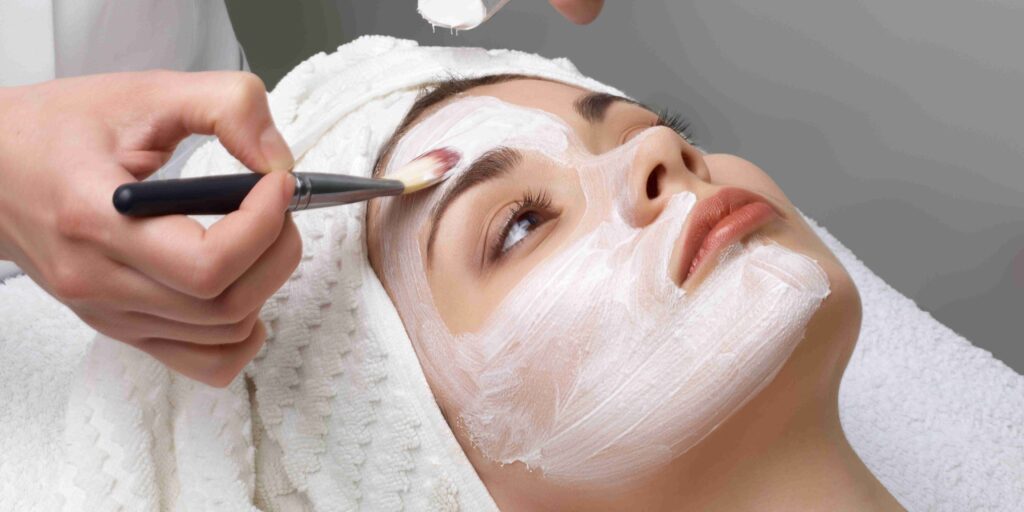

Beauty salons in the Netherlands are busy. Busy with treatments, busy with clients, busy with everything that comes with running a salon. As a result, marketing gets left behind. Not because it isn’t important, but because it doesn’t feel urgent. Until the diary is suddenly half empty. In this blog we explain what really works to get found online, in plain language, without jargon.
Three quarters of your clients start with Google, not with you.
That is how people look for a salon in 2026. They type 'gezichtsbehandeling Amsterdam' or 'wenkbrauwlaminatie Rotterdam centrum' into Google and click on the first three results. If you’re not there, you won’t be found. It’s that simple.
And yet most beauty salons in the Netherlands pay more attention to their Instagram feed than to their position in Google. Understandable, because Instagram is visible. You see what you post. You see the likes. Google feels more abstract.
But Instagram reaches people who already follow you. Google reaches people who are looking for a treatment right now, at this very moment. That is a fundamental difference. And it’s the difference between a full diary and a half-empty one.
Google wants one thing: to give the best answers to the questions people ask. When someone searches for 'schoonheidssalon Haarlem gelaatsbehandeling', Google wants to show the salon that is most relevant for it.
You build relevance in three ways. First, with a complete Google Business Profile: up-to-date photos, opening hours, treatment categories and reviews from real clients. This is free and has a direct effect on how high you appear in local search results.
Second, with specific pages per treatment on your website. Not one ‘services’ page with a list. But a separate page for facials, a separate page for brow lamination, a separate page for hair removal. Each page tells Google exactly what you offer. This is the foundation of good SEO.
Third, with location-specific content. A salon in Utrecht Overvecht has different visitors from a salon in Utrecht city centre. Separate pages per neighbourhood attract the right traffic.
Salons with lots of recent reviews rank higher in Google. That isn’t theory. That’s how the algorithm works. A salon with 80 reviews from the past six months scores higher than a salon with 200 reviews from three years ago.
The easiest way to get more reviews: simply ask for them. After every treatment, send a short WhatsApp message with a direct link to your Google review page. Satisfied clients will leave a review if you make it easy. They almost never do it of their own accord.
Instagram and Pinterest are practically unavoidable for beauty salons. Clients look for inspiration, save styles and follow salons for the atmosphere. That is valuable for brand awareness.
But social media rarely converts directly into bookings. Most salons know this deep down, yet they keep putting a disproportionate amount of time and budget into it.
Our position is clear: social media is a supporting channel, not a primary conversion channel. Use it for atmosphere, authenticity and building trust. Use Google Ads and SEO to generate enquiries.
One exception: retargeting via Instagram and Facebook to people who have already visited your website really does work. That isn’t cold reach, but a reminder to people who have already shown interest.
SEO takes time. If you want results now, you can combine it with Google Ads. The principle is simple: you pay to appear at the top for specific searches. 'Schimmelnagel behandeling Den Haag', 'gezichtsbehandeling Amstelveen'. People who search like this want to book an appointment. All they’re missing is a salon that is visible at that moment.
What doesn’t work: advertising on 'schoonheidssalon'. Too broad, too expensive, too little intent. What does work: advertising on specific treatments in specific places, with a direct link to a page about that treatment. Not to your homepage.
More and more people ask AI tools for advice. 'Welke schoonheidssalon in Amsterdam is goed voor een gezichtsbehandeling?' ChatGPT gives an answer. If your salon isn’t in that answer, you don’t exist for that person. In the US, salons are already actively working on this. In the Netherlands, hardly anyone knows what GEO is. That makes it an opportunity right now. Whoever sorts this out now will have a head start that is hard to catch up with.
How do you get AI to mention you? By answering specific questions on your website. Not in jargon, but in plain language that matches what people ask. 'Wat kost een gelaatsbehandeling in Amsterdam?' 'Hoe lang duurt een wenkbrauwlaminatie?' Questions like these, answered on your website, increase the chance that AI recommends you.
Salons that are consistently fully booked have one thing in common: they can be found at the moment someone searches. Not by chance, but by design. They have their Google Business Profile in order. They have specific treatment pages. They actively ask for reviews. And they are already building AI visibility.
Curious how DGTLbase approaches this for the beauty sector? View our approach to beauty marketing or get in touch directly.
We already hired an agency and it delivered nothing. Why would this be different?
In most cases it was down to the approach, not the channel. An agency that doesn’t touch your Google Business Profile, doesn’t write treatment pages and only sets up one broad campaign delivers little. The question isn’t whether marketing works for salons. The question is whether it was carried out properly.
What is the difference between being found on Google Maps and being found on Google itself?
Google Maps shows you to people searching locally, often on their phone and often with a direct intention to book. Regular Google search results reach people who are a little further along in their search and are looking specifically for a treatment or salon. Both are valuable and reinforce each other, but they call for a different approach.
My salon has good reviews, but I’m still not at the top. How is that possible?
Reviews are one factor. Google also looks at how recent those reviews are, how complete your profile is, how relevant your website is for the search and how consistent your information is across all platforms. A salon with fewer reviews but a more complete profile and a more active website can rank higher.
Is it worth investing in findability if my area is already full of competitors?
That’s exactly when. In a saturated market, findability is the difference between clients finding you and clients finding your competitor. Whoever is at the top gets the click. Whoever isn’t, doesn’t exist for that person.